Thursday, December 25, 2025

The Business Lessons Hidden in Your Office Holiday Party

Test Gadget Preview Image

Your company holiday party reveals more about organizational behavior than any MBA case study.

Watch closely. The same dynamics that make December gatherings awkward also explain why teams miss deadlines, why budgets spiral, and why that "quick project" turned into a six-month nightmare.

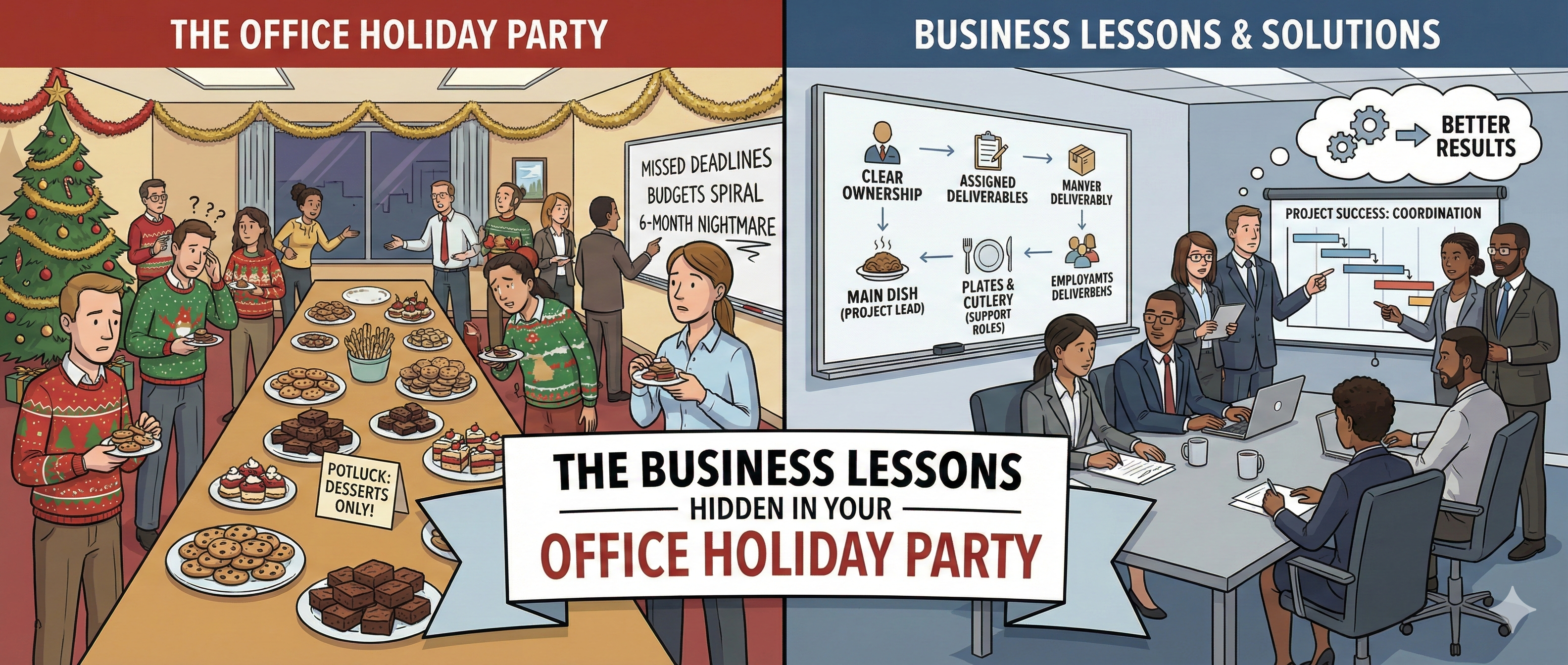
The Potluck Problem: When Everyone Brings Dessert

Every office potluck faces the same crisis. Seven people bring cookies. Nobody brings plates.

This is the **coordination problem** in action.

When you don't assign clear ownership, people default to what's comfortable. Sarah makes her famous brownies because baking feels safe. Nobody volunteers for the main dish because it requires more effort and higher stakes.

Your projects work the same way. Without explicit role assignment, everyone gravitates toward familiar tasks. Three people redesign the logo. Nobody writes the implementation plan.

The fix: Assign specific deliverables before the meeting. "Who's bringing the turkey?" gets better results than "Let's all contribute something."

Secret Santa Economics: The $20 Gift Card Phenomenon

You set a $25 limit for Secret Santa. Half the gifts are $20 Starbucks cards.

Welcome to **adverse selection**.

When you can't measure effort or creativity, people optimize for convenience. The gift card requires zero research, zero risk, and zero thought. It meets the requirement without exceeding it.

This happens in your business when you reward activity instead of outcomes. Set vague goals and watch your team deliver the corporate equivalent of gift cards: technically correct, functionally useless.

You want thoughtful work? Measure what matters. Reward the outcome, not the receipt.

The Ugly Sweater Contest: Signaling Theory in Knitwear

Dave from accounting shows up in a sweater with working LED lights and a musical sound chip.

He didn't do this for fun. He did it for **status signaling**.

The uglier and more elaborate the sweater, the stronger the message: "I'm secure enough in my position to look ridiculous." Senior leaders wear the most outrageous sweaters because they have the least to prove.

Your workplace runs on similar signals. The executive who shows up in jeans signals confidence. The new hire who overdresses signals insecurity.

Pay attention to what people signal through small choices. The manager who never admits mistakes is signaling fragility. The team member who asks "dumb" questions is signaling strength.

The Buffet Line: Scarcity and the Shrimp Effect

The shrimp disappears in four minutes. The vegetable tray sits untouched until someone takes pity on it at 8pm.

This is **perceived scarcity** driving behavior.

People don't grab shrimp because they're hungry. They grab it because everyone else is grabbing it, which signals value. The vegetables might taste better, but nobody wants to be the person who chose wrong.

Your customers do this too. They buy what other people buy, not what they necessarily need. Limited-time offers work because scarcity creates urgency. Social proof works because popularity suggests value.

If you want people to choose your product, show them other people choosing it first.

The Karaoke Moment: Risk, Reward, and Why Nobody Goes First

The karaoke machine sits silent for 45 minutes. Then one brave soul takes the mic, and suddenly there's a line.

This is the **first-mover problem**.

Nobody wants to be first because the risk feels enormous and the reward feels uncertain. But once someone breaks the seal, the social cost drops to zero. The second person isn't brave. They're just not first.

Your team meetings work the same way. The first person to share an idea takes all the social risk. The second person just agrees or builds on it.

If you want better ideas, go first. Share the half-formed thought. Ask the obvious question. Lower the risk for everyone else.

The Group Photo: Why Nobody Looks Good

Someone suggests a group photo. It takes 12 minutes to organize. The final photo includes three people blinking and one person checking their phone.

This is the **collective action problem**.

The more people involved in a decision, the harder it becomes to execute well. Everyone has input. Nobody has authority. The result satisfies no one but offends no one.

Your committees and working groups face the same challenge. Add more voices and you don't get better decisions. You get slower ones.

Want faster results? Shrink the group. Give one person final authority. Make the call and move on.

What Your Holiday Party Actually Teaches

The same forces that make your office party chaotic make your business inefficient.

Coordination problems. Adverse selection. Status signaling. Perceived scarcity. First-mover risk. Collective action paralysis.

These aren't party problems. They're organizational problems that show up everywhere, from product launches to hiring decisions to budget planning.

The difference between companies that execute well and companies that don't comes down to recognizing these patterns and designing around them.

So when you're standing by the punch bowl watching Dave explain his sweater for the third time, take notes.

Your next quarter depends on it.

Video: https://youtu.be/rFh-ojADKy8?si=ePAPOHsf5QUWRTvB

Friday, December 19, 2025

Why Your Change Initiative Failed: The Leadership Blind Spot No One Talks About

Test Gadget Preview Image

We hear it constantly: employees resist change. They're stuck in their ways. They fear the unknown.

But here's what the data actually shows.

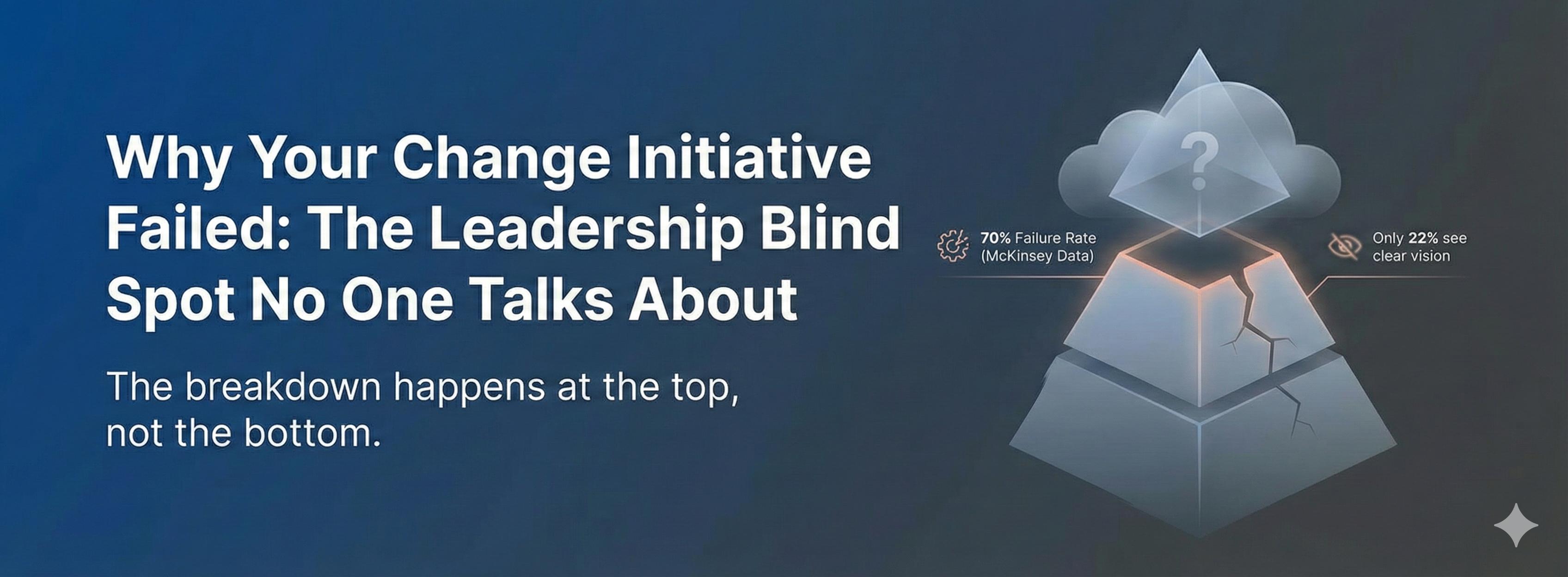
70% of organizational change efforts fail. McKinsey has tracked this pattern for years. The breakdown happens at the top, not the bottom.

Only 22% of employees believe their leaders have a clear vision. When executives send mixed messages, avoid disruption, or fail to model new behaviors, transformation loses momentum fast.

The real barrier to change isn't employee resistance. It's leadership ego.

The Disconnect Between Leaders and Teams

The gap between perception and reality is staggering.

74% of leaders say they involved employees in creating a change strategy. Only 42% of employees feel included.

This isn't a communication problem. It's a listening problem.

Tristan Boutros, SVP and Chief Transformation Officer at Warner Music Group, puts it plainly: "The ego is one of the biggest barriers to people working together effectively."

When managers give in to their egos, they insist on using ideas that haven't worked in the past. They refuse to consider suggestions from others. They ignore contributions from people they don't like. They do nothing because they fear being wrong.

The business impact is measurable. High turnover rates spike when employees deal with ego-based behavior from management. Top performers, in particular, will not tolerate an environment where their contributions are not valued.

How Ego Destroys Psychological Safety

Amy Edmondson's research at Harvard Business School identified psychological safety as the foundation of team learning and innovation.

Ego-driven leaders systematically destroy this foundation.

They shut down new ideas. They blame others for mistakes. They punish dissent. The result is an environment of fear where people stop speaking up.

A recent SHRM study confirmed that poor workplace culture is one of the top reasons employees seek new jobs. People don't leave companies. They leave leaders who make them feel unsafe.

Innovation dies in this environment. Teams stop experimenting. They stop learning. They focus on survival, not growth.

The CEO Hubris Problem

The higher a leader climbs, the fewer peers they have. Fewer people monitor their thinking, decisions, strategies, and actions.

This creates a dangerous feedback loop.

In a survey of 150 global CEOs, nearly one in five said they never doubt themselves. A 2013 study found that overconfident CEOs tend to make risky decisions about mergers and acquisitions.

The consequences are devastating. The CEO fails to see that customers are changing. R&D is stagnating. The product line is wildly out of date. Product quality is suffering. New competitors are moving faster. Costs are ballooning while revenue is declining.

They are blind to reality, living in their own self-engineered thought bubble.

Hubris becomes more dangerous over time. The more wins leaders accumulate, the less open they are to critical feedback. They become hooked on their own egos, so confident in their self-importance that they assume they can do no wrong.

What Actually Works: The Humility Gap

McKinsey research reveals an opportunity that most organizations miss.

Training in sponsorship—enabling others' success ahead of your own—supports both consultative and challenging leadership behaviors. Yet just 26% of organizations include it in development programs.

Development of situational humility is included by only 36%.

Team leaders have the strongest influence on psychological safety through their own actions. Creating a positive team climate pays additional dividends during disruption.

But here's the problem: only 27% of employees agreed their leadership is trained to lead teams through change. Only 25% of organizations have employees who say managing change is a major strength of senior leaders.

When change initiatives fail, they rarely fail on technical skills. They fail on people skills.

What This Means for Your Organization

Leadership ego blinds executives to the very human factors that determine success or failure.

You can have the best strategy, the most innovative technology, and the clearest vision. If your leaders refuse to acknowledge their own limitations or listen to feedback, the change will fail.

The solution starts with awareness.

Ask yourself: Do your leaders model the behaviors they expect from others? Do they admit when they're wrong? Do they actively seek dissenting opinions? Do they create space for people to challenge their thinking?

If the answer is no, you don't have a change management problem. You have a leadership development problem.

The organizations that adapt and thrive are the ones where leaders check their egos at the door. They build cultures of intellectual humility. They prioritize psychological safety. They understand that their job isn't to have all the answers—it's to create an environment where the best answers can emerge.

Change doesn't fail because people resist it. Change fails because leaders refuse to lead it differently.

The question isn't whether your employees are ready for change. The question is whether your leadership is humble enough to guide it.

Monday, December 15, 2025

Data Centers Stopped Storing. Now They Think.

Test Gadget Preview Image

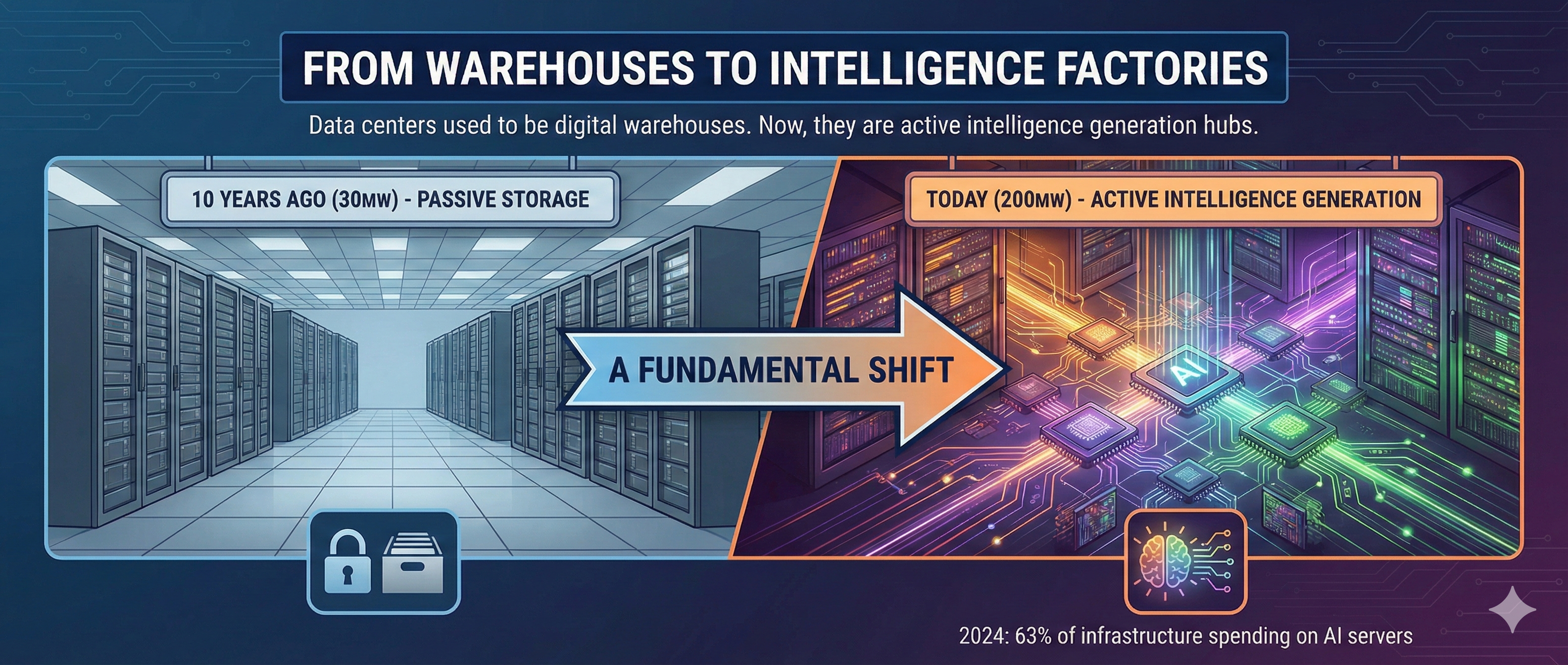
Ten years ago, a 30-megawatt data center was considered large.

Today, a 200-megawatt facility is normal.

That's not just growth. That's a fundamental shift in what these buildings do.

From Warehouses to Intelligence Factories

Data centers used to be digital warehouses. You stored information there. You retrieved it when needed. The value was in preservation and access.

That model is fading fast.

In 2024, data center servers accounted for 63% of total infrastructure spending. The reason? AI workloads have transformed these facilities from passive storage into active intelligence generation.

Modern AI data center racks process 865,000 tokens per second. They operate as single, giant accelerators rather than collections of separate machines. The infrastructure doesn't just hold data anymore—it analyzes, learns, and generates insights at unprecedented scale.

The Numbers Tell a Clear Story

The investment wave behind this transformation is staggering.

In 2024, data center spending reached $290 billion. Alphabet, Microsoft, Amazon, and Meta invested nearly $200 billion in capital expenditures. That figure is expected to climb by over 40% in 2025.

The global data center infrastructure market is on track to surpass $1 trillion in annual spending by 2030.

AWS, Microsoft, and Google Cloud plan to invest more than $250 billion in buildouts in 2025 alone.

This isn't speculative spending. Demand for AI-ready data center capacity will rise at an average rate of 33% per year between 2023 and 2030. By 2030, around 70% of total demand will be for data centers equipped to host advanced AI workloads.

Currently, only 14% of global data center power usage goes to AI. That proportion will multiply several times over in the next five years.

Supply Can't Keep Up

In Northern Virginia—the data capital of the world—the vacancy rate was less than 1% in 2024.

Prices charged by colocation providers for available data center capacity in the United States rose by an average of 35% between 2020 and 2023.

The availability of GPU and supporting infrastructure is supply constrained. Demand is so strong that the top four U.S. cloud service providers have turned away smaller customers.

"As fast as we actually put the capacity in, it's being consumed," Amazon CEO Andy Jassy said. He characterized AI as "a once-in-a-lifetime reinvention of everything we know."

Even the world's largest cloud provider struggles to keep pace.

The Power Challenge

This transformation comes with massive energy requirements.

Global power demand from data centers will increase 50% by 2027 and by as much as 165% by the end of the decade compared with 2023.

The density of power use in data centers will grow from 162 kilowatts per square foot to 176 kilowatts per square foot in 2027. AI processing workloads demand significantly more power than traditional computing.

A data center housing 30,000 GPUs consumes approximately 35.2 megawatts of power. That results in an annual electricity cost of $25.35 million. Energy alone accounts for 30-40% of total operating costs.

The infrastructure required to support intelligence processing is fundamentally different from what existed just a decade ago.

What This Means for Business Leaders

You rely on cloud services. You use AI tools. You make data-driven decisions.

The infrastructure supporting those capabilities is changing faster than most people realize.

Access to computing power is becoming a competitive advantage. Companies that secure capacity early gain speed and flexibility. Those waiting face delays, higher costs, and limited options.

Energy costs will shape strategic decisions. As power consumption rises, the location and efficiency of your data processing operations matter more. Businesses will need to consider energy availability when planning infrastructure investments.

The value equation has shifted. Data centers no longer compete primarily on storage capacity or retrieval speed. They compete on processing power, AI capability, and the ability to generate intelligence from raw data.

The Practical Reality

The global data center server market is projected to grow nearly fivefold from $204 billion in 2024 to $987 billion by 2030.

That growth reflects a simple truth: the value of data centers is increasingly tied to their ability to process and analyze, not simply store.

This drives innovation in hardware design, cooling systems, power management, and network architecture. Every component must support higher processing loads and greater energy efficiency.

For entrepreneurs and business leaders, this transformation creates both opportunities and constraints. AI tools become more powerful and accessible. But the infrastructure supporting them becomes more expensive and harder to secure.

Looking Forward

Data centers have evolved from storage facilities into intelligence factories.

The buildings look similar from the outside. Inside, everything has changed.

Understanding this shift helps you make better decisions about technology investments, vendor relationships, and strategic planning. The companies building and operating these facilities are betting trillions of dollars that intelligence processing will define the next decade of computing.

The evidence suggests they're right.

Video: https://youtu.be/imuKXT1AqyY?si=R9OAyH-OC5mCM85e

Saturday, December 6, 2025

Why Private Enterprise Can't Build the Moon Economy Alone

Test Gadget Preview Image

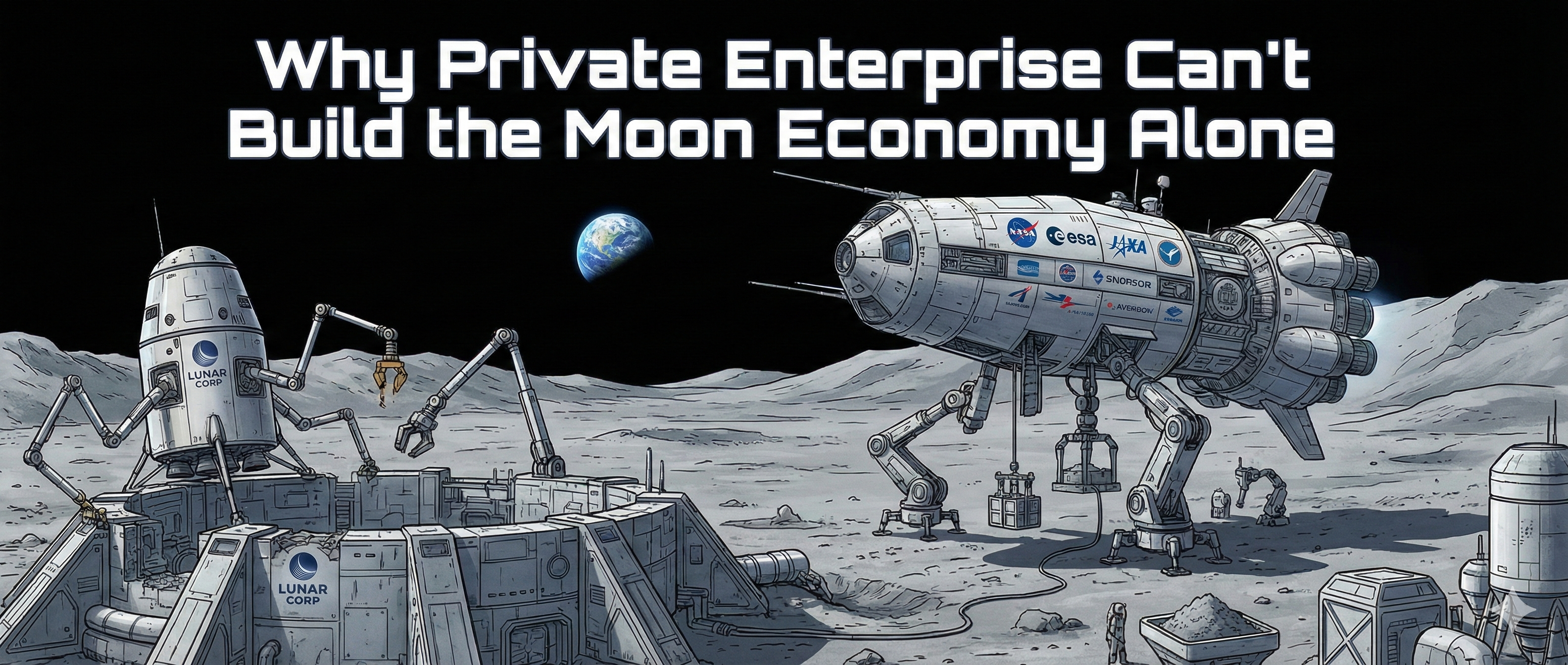
I've been studying how NASA's approach to lunar infrastructure reveals something fundamental about market creation.

The insight: **private capital doesn't fund infrastructure before markets exist.**

NASA's Commercial Lunar Payload Services (CLPS) program represents a $2.6 billion market opportunity through 2028. Fourteen commercial vendors can now compete for contracts to deliver payloads to the Moon.

The shift matters because NASA stopped building spacecraft and started buying delivery services.

The Anchor Customer Model

Intuitive Machines achieved the first commercial Moon landing in February 2024. The company has since secured four CLPS contracts worth $77-$118 million each to deliver over 20 NASA payloads.

These contracts provide something private investors can't: **revenue certainty in an unproven market.**

The structure uses fixed-price agreements with no funding for R&D or cost overruns. This approach keeps mission costs around $100 million, compared to traditional NASA programs that have struggled with budget expansion.

The economics work because government becomes the first customer, not the last resort.

The Multiplier Effect

NASA's FY 2023 budget of $25.4 billion generated $75.6 billion in economic output. That's $8 of economic activity for every dollar spent.

The program supported 304,803 jobs, with each NASA position creating nearly 16 additional positions across the broader economy.

This multiplier effect explains why public investment in infrastructure creates conditions for commercial activity. The government absorbs initial risk while private companies build scalable systems.

Building Shared Infrastructure

DARPA's LunA-10 initiative selected 14 companies to design commercially owned lunar infrastructure over the next decade. The focus spans lunar power, mining, communications, and construction.

The approach emphasizes **shared, scalable systems** rather than isolated mission architectures.

Historical precedents support this model. The Transcontinental Railroad used government land grants to de-risk private capital. The internet evolved from publicly funded ARPANET into a commercial explosion after opening in the 1990s.

Both created industries unforeseen by their original architects.

The Commercial Reality

The lunar market is projected to exceed $142 billion by 2040. But governments will continue to dominate economic activity.

Commercial missions are expected to represent only 25% of total revenue despite accounting for 50% of missions.

This reveals the critical role of public-private partnerships in creating viable commercial markets. Private enterprise excels at optimization and scale, but struggles with the initial capital requirements of unproven infrastructure.

The lesson applies beyond space exploration. Markets emerge when government investment creates the foundation for commercial activity to flourish.

Wednesday, December 3, 2025

Your Business Is a Decision-Making Engine

Test Gadget Preview Image

We talk about businesses as if they're machines that produce products or deliver services.

That's the output.

But the real engine running underneath? Decisions.

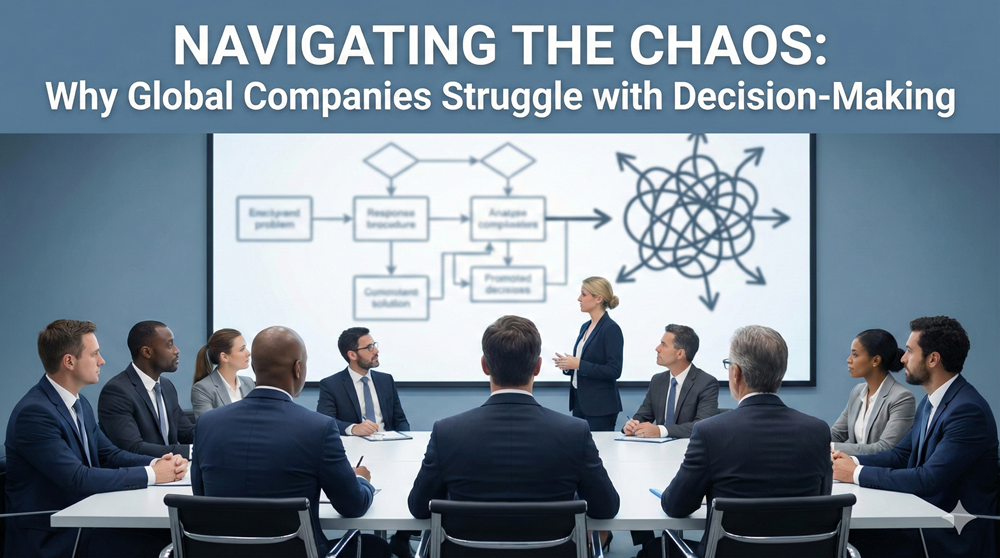
Every missed deadline, every duplicated effort, every moment of confusion in your organization traces back to how decisions get made—and how well they get made matters. Companies that make high-quality decisions quickly consistently outperform their competitors.

The question is: does your organization know how to make them well?

AI Amplifies What Already Exists

Here's what keeps me up at night about the AI revolution.

AI doesn't fix bad decision-making. It accelerates it.

Without structured, high-quality data and clear decision frameworks, AI amplifies chaos. A bad decision that used to impact dozens of customers now impacts thousands in minutes. 69% of leaders say poor data quality directly limits their ability to make informed decisions.

The speed advantage of AI only matters if your decision quality is already strong.

If your workflows are fragmented or unclear, AI will accelerate the confusion. The technology executes at unprecedented speed and scale, which means the quality of human judgment becomes paramount. One better decision can change the trajectory of your business. One amplified bad decision can sink it.

Four Questions Every Organization Must Answer

Most companies don't measure their decision effectiveness. They don't know how they stack up against competitors, and they can't tell whether they're getting better or worse over time.

This creates a dangerous blind spot.

The gap between perception and reality means organizations can't fix their decision quality if they don't know it needs fixing. Business leaders think their organizations have good decision quality, but McKinsey research shows that most companies report poor decision-making across different types of decisions, with only 20% of organizations consistently making high-quality decisions quickly.

To build a real decision-making engine, you need clear answers to four questions:

1. What decisions need to be made?

Not every choice deserves the same attention. Important decisions often get mired in head-banging meetings, debates, and consensus seeking. Meanwhile, routine decisions consume executive time that should go elsewhere.

Map your decision landscape. Identify which decisions are strategic, which are operational, and which can be automated or delegated.

2. Who owns each decision?

Consensus means no ownership.

What matters isn't that everyone agrees. It's that everyone is listened to, and then the right person makes a decision, communicates it clearly, and rallies everyone around it.

Organizations that follow decision best practices make decisions twice as fast in half as many meetings and find innovative solutions 75% more often. The RAPID framework breaks this down: Recommend, Agree, Perform, Input, Decide. Each role is essential, but only one person decides.

3. When does each decision need to happen?

Faster decisions tend to be higher quality.

This surprises people. We assume speed undercuts merit, but good decision-making practices yield decisions that are both high quality and fast. Companies that make high-quality decisions quickly and implement them effectively win more contracts, get to market faster, and beat out rivals.

The key is knowing which decisions need deep analysis and which need rapid execution.

4. Can we actually execute on this?

A decision without execution capability is just a wish.

Poor leadership begins with missed deadlines, unspoken frustrations, and meetings filled with compliance instead of collaboration. Over time, it erodes trust, weakens culture, and drains both people and profits.

Before you decide, ask: do we have the resources, skills, and systems to make this happen?

The Hidden Cost of Decision Dysfunction

Companies with disengaged employees experience 37% higher absenteeism and 18% lower productivity.

These aren't just HR problems. They're decision-making problems.

When organizations undervalue operational support roles and rely too heavily on individual endurance without support, they create environments where good decisions become impossible. People can't execute well when they're drowning in confusion about who decides what, when decisions need to happen, and whether anyone will follow through.

The workplace consequences are tangible. Low productivity often causes overtime work to meet set targets, with additional hours incurring extra wages. Missed deadlines leave clients feeling disheartened and providing inconsistent feedback. The cycle reinforces itself.

Building a Decision System That Scales

Successful organizations don't just make good decisions. They design systems that consistently produce good decisions at the right pace.

This requires balancing two forces that seem to oppose each other:

Autonomy with alignment.

People need freedom to make decisions in their domain without constant approval. But those decisions need to align with organizational strategy and values. The balance comes from clear frameworks, not micromanagement.

Organizations should shift from survival focus to thriving mindset, from reactive to proactive approaches. This means embedding decision-making frameworks into organizational culture, not treating them as occasional tools.

Data with discernment.

Good data informs decisions, but human judgment interprets context, weighs trade-offs, and considers long-term implications. AI can process information at scale, but it can't replace the strategic thinking that separates good companies from great ones.

Strategic alignment enhances organizational resilience. When decision-making processes connect employee growth with organizational goals, you create environments where people understand not just what to decide, but why it matters.

Leadership as System Design

The role of leadership is changing.

Leaders used to be the primary decision-makers. Now, they need to be architects of decision-making systems.

This means creating supportive environments for resilience, not relying on employee endurance without support. It means recognizing critical support functions and implementing enterprise-wide frameworks that embed accountability across the organization.

Confidence is the cornerstone.

Management confidence influences investor confidence, stakeholder confidence, and client confidence. When leaders demonstrate clear decision-making processes, communicate transparently, and follow through consistently, they build organizational cultures where good decisions become the norm.

Leadership must drive cultural shifts toward technology integration while maintaining the human judgment that makes decisions meaningful. The goal isn't to eliminate human decision-making. It's to amplify human capability through better systems.

The Question That Matters

Is your business making decisions, or just moving fast?

Speed without quality decision-making is just chaos at a higher velocity. Organizations that measure decision effectiveness, implement clear frameworks, and build cultures of accountability don't just survive. They thrive.

The companies winning today aren't necessarily the ones with the best products or the most resources. They're the ones that can make high-quality decisions quickly, communicate them clearly, and execute them effectively.

Your business is a decision-making engine.

The question is: how well is it running?

Monday, December 1, 2025

The Moon's $26 Trillion Infrastructure Gap

Test Gadget Preview Image

I've been watching the lunar economy unfold, and something clicked when I saw the numbers.

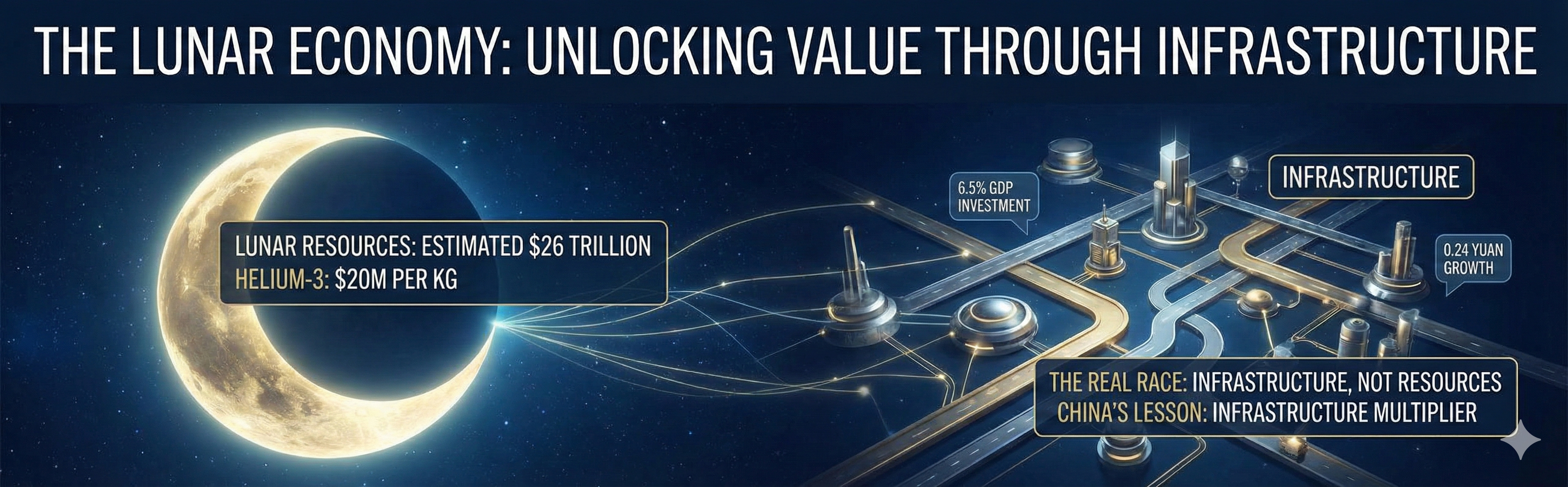
The moon holds an estimated **$26 trillion in resources**. Helium-3 alone is valued at **$20 million per kilogram**. Companies are signing purchase agreements worth hundreds of millions. The U.S. Department of Energy has already committed to buying three liters of moon-harvested helium-3 by April 2029.

This isn't speculation anymore. It's commerce.

The Real Race: Infrastructure, Not Resources

Here's what most people miss about frontier markets.

The value isn't in the resources themselves. It's in **who controls the infrastructure** to extract and transport them.

China understood this in the 1990s. The country invested 6.5% of GDP in infrastructure when the average developing nation spent 4%. By 2009, coastal provinces were investing 15-20% of GDP in roads, ports, and power systems.

The result? Every yuan invested in transport infrastructure generated 0.24 yuan in GDP growth in central regions. That's the multiplier effect in action.

The moon follows the same logic.

Building Toll Booths in Space

More than 400 missions are forecast to launch to the moon between 2022 and 2032. Each one needs power, communication networks, and landing infrastructure.

**The first entity to build these systems controls access.**

DARPA's LunA-10 program is funding companies to develop "commercially owned-and-operated lunar infrastructure." Intuitive Machines has NASA contracts worth up to $4.82 billion over 10 years for Near Space Network services.

This is the government acting as investor of first resort. They're funding the infrastructure buildout, then becoming procurement agencies once the systems are operational.

Sound familiar? It's the same model that built highways, railways, and the internet.

Territory Through Infrastructure

The 1967 Outer Space Treaty says no nation can claim lunar territory.

But here's the loophole: **infrastructure creates de facto control zones.**

A nuclear power source on the moon can impose "keep out zones" for safety purposes. A communication relay can charge fees for data transmission. A landing pad can set access terms.

You don't need to own the land if you own the only road to it.

The Next Decade Decides Everything

The global space economy hit $613 billion in 2024. Projections show it reaching $1 trillion by 2032.

Helsinki-based Bluefors signed a deal worth $300 million to purchase up to 1,000 liters of lunar helium-3 annually from startup Interlune. These aren't future plans. These are signed contracts.

The infrastructure gap is closing fast.

**The companies and nations that build lunar infrastructure now will control market access for generations.** The rest will pay tolls to use systems they didn't build.

This is how frontier markets work. The infrastructure builders become the gatekeepers. The resource extractors become the tenants.

The moon is no different.

What This Means for You

If you're tracking emerging markets, the lunar economy offers a clear parallel to every frontier market that came before it.

Watch the infrastructure investments, not just the resource valuations. Track which companies are building power systems, communication networks, and transportation hubs.

Those are the positions that matter.

The gold rush gets the headlines. The people selling picks and shovels build the fortunes. In space, the picks and shovels are power grids, landing pads, and data networks.

The race to build them has already started.

When Everyone Gets the Same Raise, Nobody Wins

I've been watching a quiet shift happen in corporate compensation. More companies are moving toward uniform pay increases across their e...