I saw something recently that stopped me cold.
An intern posted in a workplace forum asking how to pretend to work without getting caught. Not how to work more efficiently. Not how to manage downtime between projects. How to fake productivity.
The responses weren't what bothered me most. What got me was the tone. People shared their strategies like they were trading survival tips. Move your mouse every few minutes. Keep multiple browser tabs open. Send emails at odd hours. Schedule messages to look busy.
This isn't laziness. This is something worse.
When your employees spend more energy appearing productive than being productive, you're not dealing with a performance problem. You're looking at organizational damage that compounds daily.
The Numbers Tell a Story Most Leaders Ignore
Nearly half of managers worry about employees faking productivity. But here's the twist: 37% of managers admit to doing it themselves.
The hypocrisy is stunning.
Leaders complain about the problem while participating in it. More than a third of UK workers, including 38% of C-suite leaders, confessed to "fauxductivity" in a 2024 survey. This isn't a Gen Z problem. This is a leadership problem.
Only 15% of employees admit to task masking. But the vast majority of in-office workers (79%) and remote workers (88%) feel the need to prove they're being productive, according to BambooHR data. Even more concerning: 53% report creating "work barriers"—intentionally complicating their roles to reduce layoff risk.
Read that again.
People are making their jobs harder on purpose because they're optimizing for survival instead of success.
Engagement Isn't Falling—It's Collapsing
Employee engagement hit a decade low of 31% in 2024, the lowest since 2014, according to Gallup. Since 2020, there are 8 million fewer engaged workers in the U.S. That's not a trend. That's a crisis.
The cost? Approximately $2 trillion in lost productivity annually in the U.S. alone.
Another report shows engagement dropping from 88% to 64% in a single year. That's a 24-percentage-point collapse. Globally, only 21% of employees are engaged at work. That means 79% are either passively going through the motions or actively working against their employer's interests.
When people show up but check out mentally, you get presenteeism. And presenteeism costs U.S. companies over $150 billion a year—nearly 10 times more than absenteeism.
Employees cost businesses the equivalent of three months per year in lost productivity. They're absent an average of four days annually. But they confess to being unproductive on the job for 57.5 days each.
Almost three working months of showing up without showing up.
What Task Masking Actually Destroys
Task masking doesn't just waste time. It rewires how people think about work.
It creates learned helplessness.
Learned helplessness happens when employees feel stripped of any power to implement change or introduce new ideas. Research published in the Journal of Management found that learned helplessness negatively impacts work involvement, increases absenteeism, drives employee turnover, and kills initiative.
The same organization that develops programs to motivate performance could be driving those same people to become helpless. When employees feel powerless in the face of unreasonable organizational behavior, they become stressed or depressed. And learned helplessness spreads like an infection from manager to manager and level to level.
You're not just losing productivity. You're training people to stop trying.
It shifts the optimization target.
When appearing busy becomes more important than being effective, you've changed what people optimize for. They stop asking "How do I solve this problem?" and start asking "How do I look like I'm solving this problem?"
The incentive structure flips. Innovation becomes risky. Efficiency becomes suspicious. Speed looks like corner-cutting.
People learn to protect themselves by performing effort instead of delivering results.
It erodes trust at every level.
Managers see task masking as a productivity issue. Employees view it as a survival tactic. According to managers, distractions are the main problem. But employees point to work-life balance struggles and burnout as their top reasons for appearing busy.
There's a clear disconnect between an employee's experience and their manager's perception of that experience.
When that gap widens, trust disappears. And without trust, you can't have collaboration, feedback, or growth.
This Is a System Problem, Not a People Problem
Andy Wilson, senior director of new product solutions at Dropbox, said it clearly: Task masking is "not laziness—it is a symptom of how work has been designed."
The current work system rewards people for the number of hours they put in. If they're task masking, it's likely because they haven't been given the right amount and right quality of work to keep them busy.
You can't fix this with monitoring software or stricter policies. Those just make people better at hiding.
You fix this by changing the conditions that make task masking feel necessary.
Stop measuring presence. Measure outcomes.
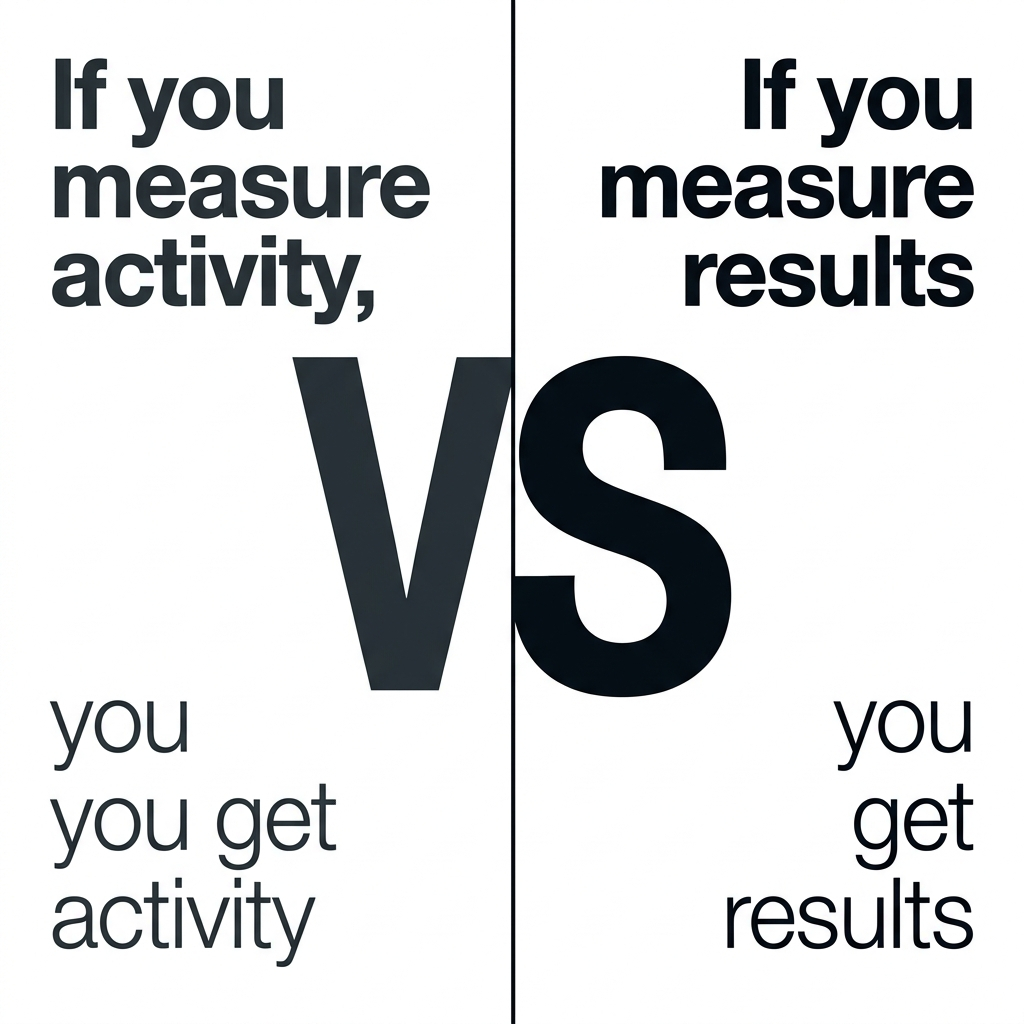
If you're tracking hours logged, emails sent, or meetings attended, you're incentivizing the wrong behavior. People will give you what you measure. If you measure activity, you get activity. If you measure results, you get results.
Create psychological safety.
People fake productivity when they're afraid of what happens if they don't look busy. If admitting "I finished early" or "I need more challenging work" feels risky, your culture is broken.
Make it safe to be honest about workload, capacity, and challenges.
Give people meaningful work.
Task masking often happens because the work itself doesn't matter. If someone spends their day on tasks that feel pointless, they'll disengage. And disengaged people don't produce—they perform.
Connect work to impact. Show people how their effort contributes to something larger. Meaning drives engagement more than perks or pay.
Build feedback loops that matter.
If feedback only flows one way—top down—you're missing half the story. Create channels where employees can tell you what's broken without fear of retaliation.
The people doing the work know where the problems are. Ask them. Then act on what they tell you.
The Long-Term Damage Is Worse Than the Short-Term Waste
Task masking isn't just about lost hours. It's about what those hours teach people.
They learn that optics matter more than outcomes. That survival beats contribution. That the system rewards performance over performance.
Once that lesson sets in, it's hard to undo.
You end up with a workforce that's technically present but mentally gone. People who show up, check boxes, and protect themselves. They're not innovating. They're not solving problems. They're not building anything.
They're just pretending.
And if you're leading an organization where pretending has become the norm, you're not managing a productivity issue. You're managing a culture in decline.
The question isn't whether your people are task masking. The question is whether your systems make it necessary. Because if the answer is yes, the problem isn't them.
It's you.



No comments:
Post a Comment