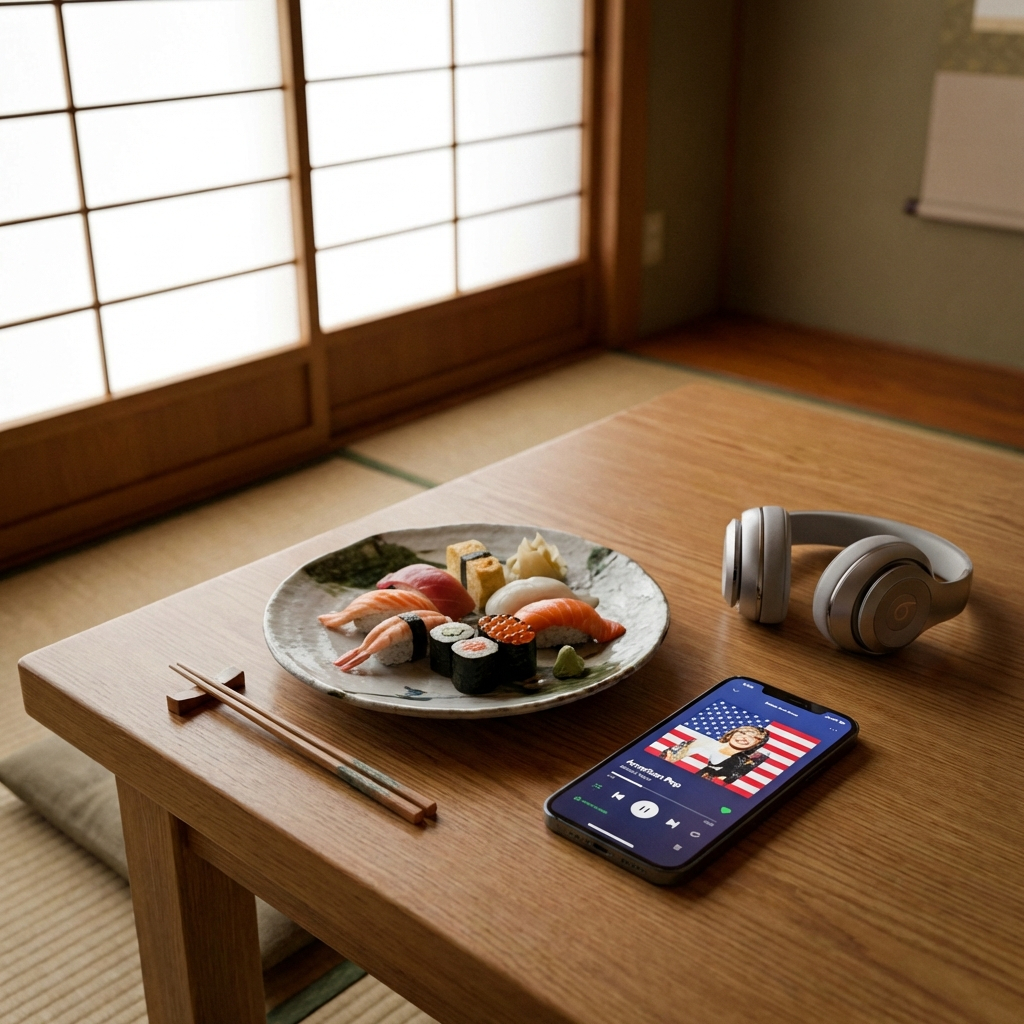
I walked into a local sushi restaurant last week. The space looked right—traditional Japanese decor, clean lines, bamboo accents. The staff appeared to be of Japanese heritage. The menu featured authentic dishes.
Then the music started.
Contemporary American pop filled the dining room. The disconnect was immediate and jarring. Everything visual told one story while the audio told another. The food was fine. The service was adequate. But something felt off.
I left thinking about how many businesses do this exact thing without realizing it.
Every Detail Tells Your Story
Your brand is the sum of every touchpoint a customer experiences. Not just the big ones like product quality or service speed. The small ones matter too the music playing in your space, the font on your menu, the way your staff greets people, even the temperature of the room.
When these elements align, they create what retail strategists call a cohesive brand experience. When they clash, they create confusion.
Take Simons, the Canadian fashion retailer. They invested over $150 million transforming their stores into what they call "artistic destinations." Every element reinforces their identity as a trend-conscious modern retailer with authentic roots. The music matches the aesthetic. The layout supports the shopping experience. The staff embodies the brand values.
The result is long-term customer loyalty built on consistency.
The Cost of Misalignment
Hudson's Bay struggled with this for years. While competitors invested in modern retail environments, The Bay maintained outdated layouts that sent mixed signals about their identity. Were they a discount retailer? A luxury department store? A heritage brand?
Customers couldn't tell. The brand became forgettable.
The same thing happens in restaurants, professional services, retail stores, and even digital products. You build a beautiful website but use generic stock photos. You create a premium product but package it in cheap materials. You train your team on customer service but play music that makes people want to leave.
Each misalignment chips away at trust.
What Cohesion Actually Looks Like
Brand cohesion means every element works together to reinforce the same message. It requires three things:
Intentional design decisions. You need to think through every customer touchpoint. What story does your lighting tell? Your color palette? Your word choices? These decisions should connect back to your core brand identity.
Consistent investment. Simons understood that brand identity requires ongoing attention. You can't design a great space and then ignore it for five years. Markets change. Customer expectations evolve. Your environment needs to keep pace.
Attention to sensory details. People experience your brand through multiple senses. Visual elements get the most attention, but audio matters too. So does scent, texture, and even taste in food businesses. When these sensory inputs contradict each other, customers notice.
The Authenticity Question
Customers today expect authenticity in brand messaging. They can spot when something feels forced or fake. A Japanese restaurant playing American pop music feels inauthentic because it breaks the cultural narrative the space establishes.
This matters more now than it did ten years ago. You're competing in a saturated market where customers have endless choices. The businesses that win are the ones that create genuine, cohesive experiences.
Authenticity doesn't mean you can't evolve or experiment. It means your choices should make sense together. A modern sushi restaurant could absolutely play contemporary music—if the decor, menu, and overall vibe supported that positioning. The problem comes when you mix signals without intention.
How to Audit Your Own Experience
Walk through your customer's journey like you're experiencing it for the first time. Better yet, ask someone who's never visited to do it and report back.
What do they see first? What do they hear? How does the space make them feel? Do all these elements tell the same story?
Look for disconnects:
• Your website promises premium service but your physical space looks dated
• Your brand voice is casual and friendly but your customer service scripts are formal
• Your product packaging suggests luxury but your pricing suggests budget
• Your decor establishes one cultural identity but your music suggests another
These gaps create cognitive dissonance. Customers might not consciously identify the problem, but they'll feel that something is off. That feeling affects their perception of quality, their willingness to return, and their likelihood to recommend you.
Small Changes, Big Impact
The good news is that fixing these disconnects often requires small adjustments rather than complete overhauls.
That sushi restaurant could solve its problem with a different playlist. A retail store could update its lighting. A service business could revise its email templates to match its brand voice.
The key is recognizing that these details matter. They're not superficial touches you can ignore while focusing on "more important" things like product development or marketing strategy. They are the marketing strategy. They're how customers actually experience your brand.
Building From the Inside Out
The strongest brands start with a clear identity and then make every decision through that lens. What do you stand for? What experience do you want to create? What should customers feel when they interact with you?
Once you answer these questions, the tactical decisions become easier. You have a framework for evaluating whether that music fits, whether that color works, whether that word choice aligns.
Simons built their retail success on this principle. They knew they wanted to be a modern Canadian retailer with authentic roots. Every store design decision, every product selection, every customer interaction reinforced that identity.
The result is a brand people recognize and trust.
The Real Lesson
That sushi restaurant taught me something valuable. You can get the big things right—good food, decent service, attractive space—and still create a mediocre experience if you ignore the details.
Your customers notice more than you think. They pick up on inconsistencies even when they can't articulate what feels wrong. These small disconnects accumulate into a general sense that something is off.
The businesses that stand out are the ones that pay attention to everything. They understand that brand cohesion isn't about perfection. It's about intention. Every element should have a reason for being there, and those reasons should connect back to a unified story.
Start with your own business. Walk through your customer's experience. Listen to what's playing. Look at what's displayed. Feel what the environment communicates.
Then ask yourself: does this all tell the same story?
If the answer is no, you know where to start.



No comments:
Post a Comment