I've been studying premium brands for years, and one pattern keeps showing up: the companies that win on price are the ones who never talk about price.
R.M. Williams sells boots for $430 to $649. Competitors offer similar products at comparable prices. Yet R.M. Williams owns a market position where customers don't comparison shop. They buy because, as one reviewer put it, "there is no obvious equivalent."
That's not luck. That's a framework.
The Four Pillars of Premium Positioning
After analyzing R.M. Williams alongside brands like Patagonia and Apple, I've identified four elements that separate premium brands from expensive ones:
1. Lead with durability and long-term value
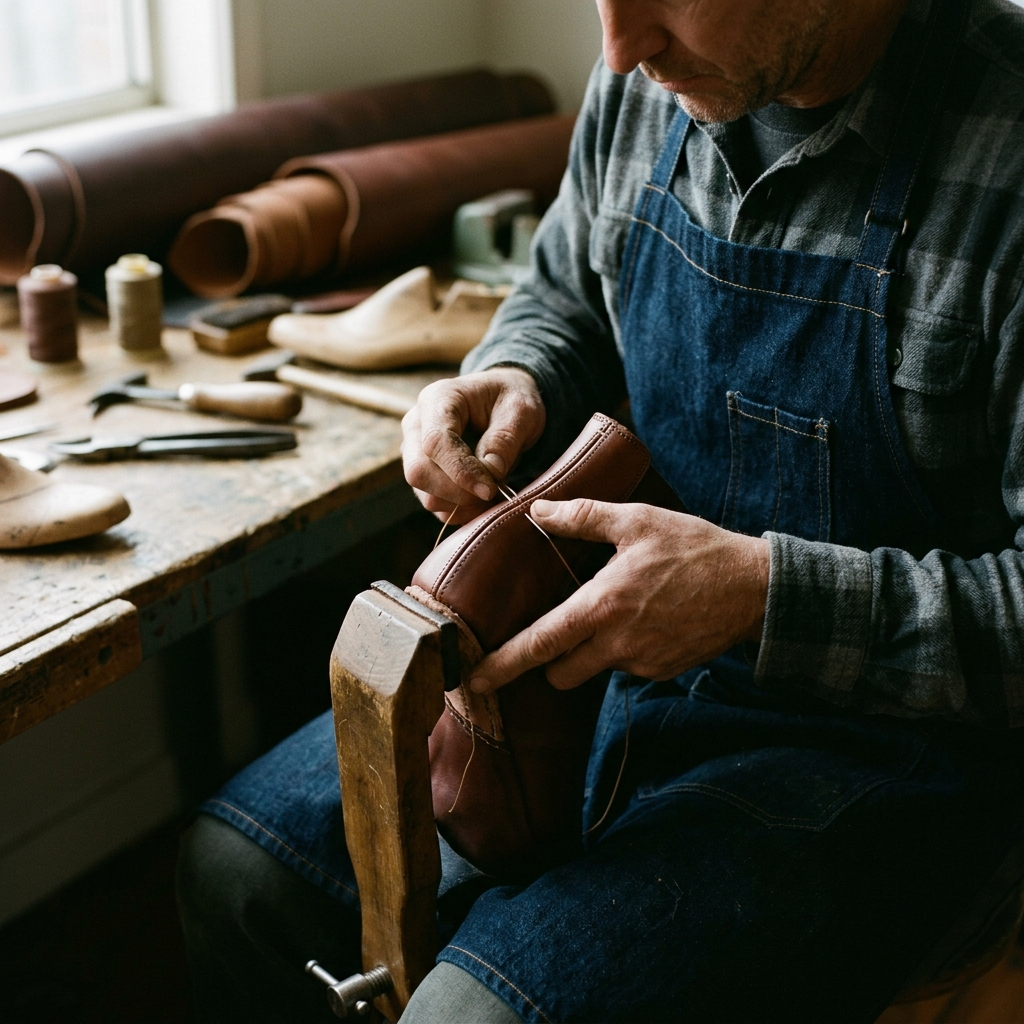
R.M. Williams boots are constructed by hand using a single piece of premium leather. This whole-cut design eliminates side seams, creating both exceptional durability and a clean aesthetic that has remained unchanged since 1932.
With proper care, these boots maintain their shape after years of use. The company offers repair services at their factory, allowing customers to extend the life of their boots indefinitely. You're not buying footwear. You're buying a multi-decade relationship.
The yearling leather comes from cows slaughtered at one year of age. This creates leather that's softer than cowhide but more rugged than calfskin. The material choice delivers both comfort and durability.
2. Show the math
Premium brands understand something fundamental about human psychology: total cost of ownership shifts the customer's mindset from initial purchase price to full lifecycle value.
A $600 boot that lasts 20 years costs $30 per year. A $200 boot that lasts 3 years costs $67 per year. The premium option is cheaper.
This isn't just theory. Research shows that premium-priced products are perceived as more reliable and durable compared to mid-priced goods. The perception is psychologically justified: more expensive products are associated with higher quality, limited access, and the social status of the owner.
R.M. Williams customers describe the boots as "stupid, crazy, insanely comfortable" from day one. Zero break-in time. That's not marketing copy. That's a value proposition you can measure.
Transparency as Competitive Advantage
3. Demonstrate craftsmanship through transparency
I've noticed a shift in how premium brands communicate. Équité Research estimates that over 95 percent of perceived value in luxury stems from storytelling. The product is merely an expression of a story.
But storytelling has evolved. For Gen Z, transparency isn't admired—it's expected. This generation sees sustainability as the new luxury. Craftsmanship is still respected, but it can no longer stay silent about who made it, where, and under what conditions.
Patagonia set new standards for transparency in fashion by openly sharing information about their supply chain, manufacturing processes, and environmental impact. Through initiatives like "The Footprint Chronicles," customers can trace the journey of products from raw materials to finished goods.
R.M. Williams follows a similar approach. The single-piece construction isn't just a technical detail. It's proof of craftsmanship you can see and feel. The whole-cut design means fewer weak points, better durability, and a cleaner aesthetic. The transparency builds trust.
Building for the Right Buyer
4. Build for the buyer who asks 'how long will this last' not 'how much does it cost'
Bill Clinton wore R.M. Williams boots to his second presidential inauguration. The Australian army outfitted thousands of soldiers with black Craftsman boots for military parades. This isn't just footwear—it's Australia's national boot, exported to 15 countries and worn by everyone from outback workers to world leaders.
That positioning didn't happen by accident. R.M. Williams targets a specific customer: someone who values longevity over novelty, quality over quantity, and total cost of ownership over sticker price.
The Comfort Craftsman model is their top-selling boot. It requires zero break-in time and maintains its shape for years. Customers don't buy for price—they buy for the look, the brand story, and because there is no obvious equivalent.
The Mathematics of Premium
Consumer-Perceived Value is now the decisive battleground for brands that want to avoid commoditization and protect margin. Since 2024, economic pressure, rising skepticism about price practices, and greater expectations for intangible benefits mean that perception often drives purchase decisions more than product specifications.
Value-based pricing allows companies to capture a greater share of the value they create. By focusing on a product's benefits, they can command premium prices that reflect its true worth to the customer.
Apple justifies its premium prices because customers perceive Apple products to be of higher quality and value compared to alternatives. The perception is reinforced by the company's strong brand image built on innovation, quality, and prestige.
R.M. Williams follows the same playbook. The boots are priced significantly higher than regular footwear, but the price is justified by perceived benefits: exceptional craftsmanship, high-quality materials, and the prestige associated with the brand.
The Long Game
High-quality leather shoes can last anywhere between years and decades. With proper care, leather boots in the R.M. Williams range will stay in good shape for many years. The company's repair services turn a purchase into a multi-decade relationship.
This is the real insight: 84% of young luxury buyers now see luxury as an immersive experience rather than a possession. Luxury is no longer just about owning something beautiful—it's about believing in what you own.
The most successful premium brands understand that their price reflects a promise, communicated through every touchpoint from packaging to customer service.
What This Means for Your Business
You don't need to sell boots to apply this framework. The principles work across industries:
Lead with durability. Show customers how your product or service delivers value over time, not just at the point of purchase.
Show the math. Calculate cost-per-use or total cost of ownership. Make the economics visible and compelling.
Demonstrate craftsmanship through transparency. Share your process, your materials, your decisions. Transparency builds trust, and trust justifies premium pricing.
Build for the right buyer. Target customers who ask "how long will this last" instead of "how much does it cost." These customers exist in every market.
R.M. Williams has been doing all four for 90 years. The boots cost more than alternatives, but customers don't care about the price. They care about the value.
That's the difference between premium and expensive.



No comments:
Post a Comment